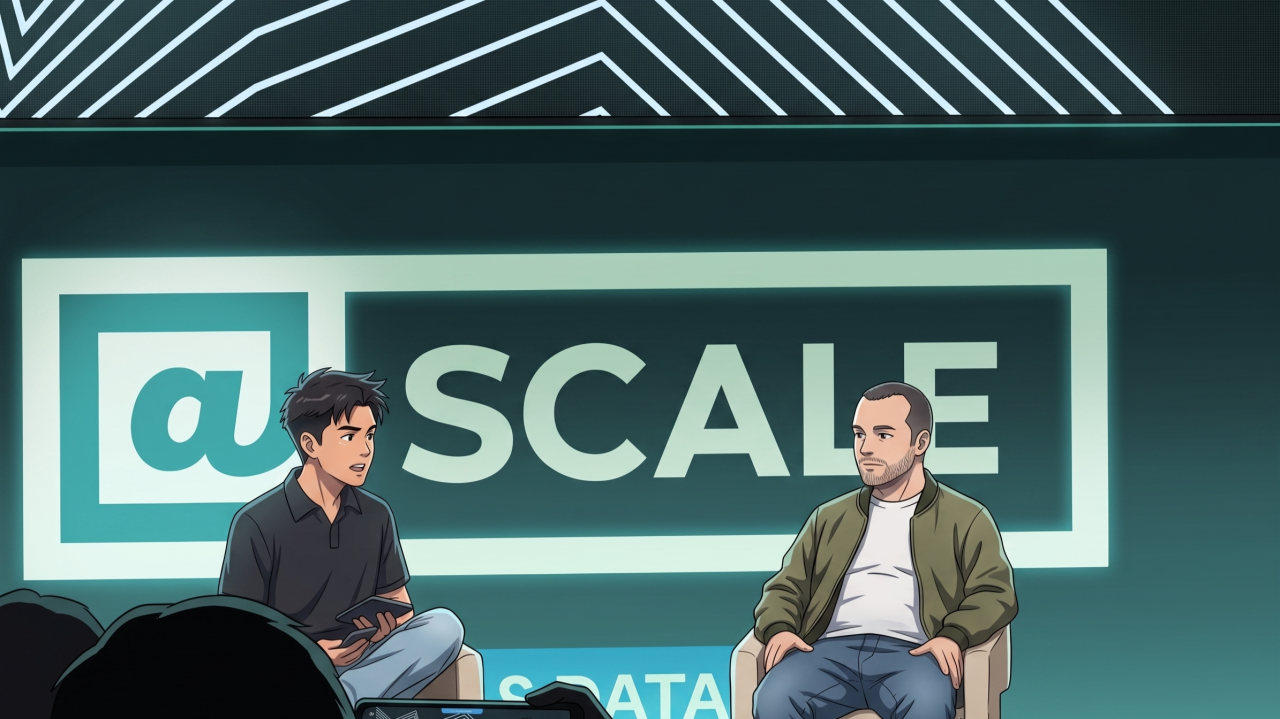
A serendipitous free coffee sign led to one of the sharpest lessons in single-goal marketing I’ve seen all year.
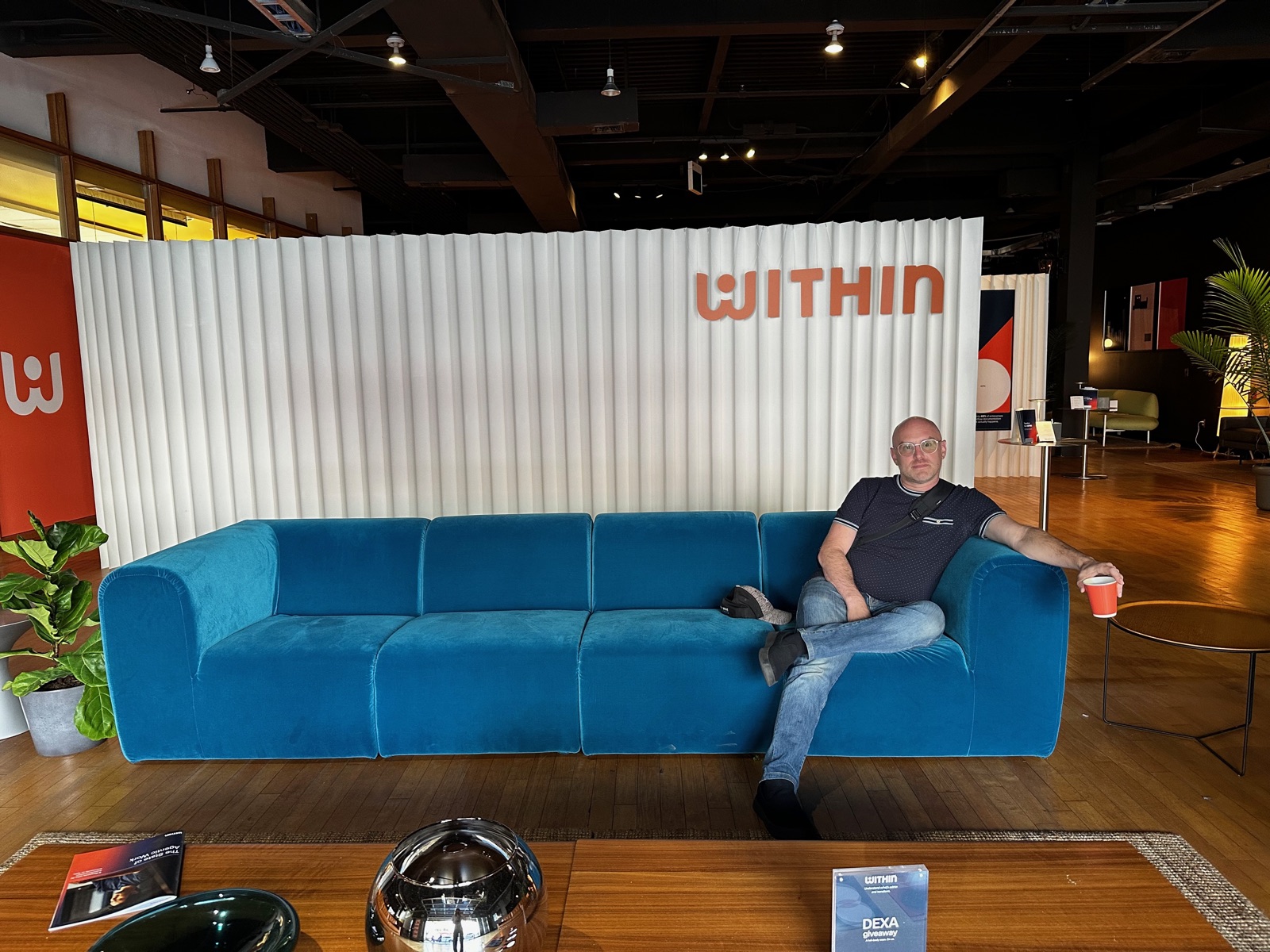
I was walking down a street in Palo Alto with a friend when we passed a giant open door and a sign that said FREE COFFEE. Behind the door: what looked like a furniture store. Three big modern couches around a low coffee table, plants, warm light. So I walked in and asked the person at the front the only reasonable question. What is this?
An AI transformation startup, she said.
I got my free coffee.
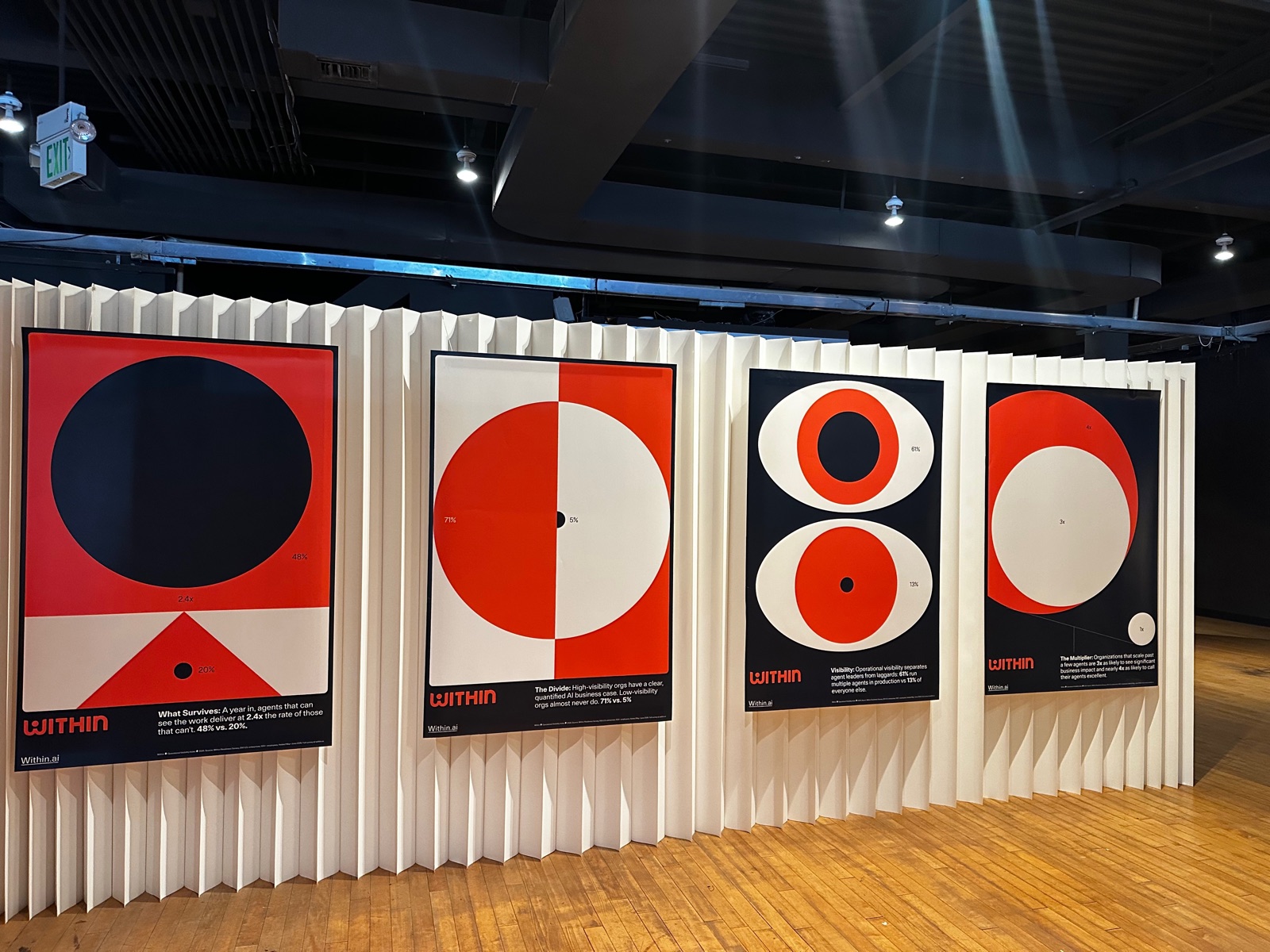
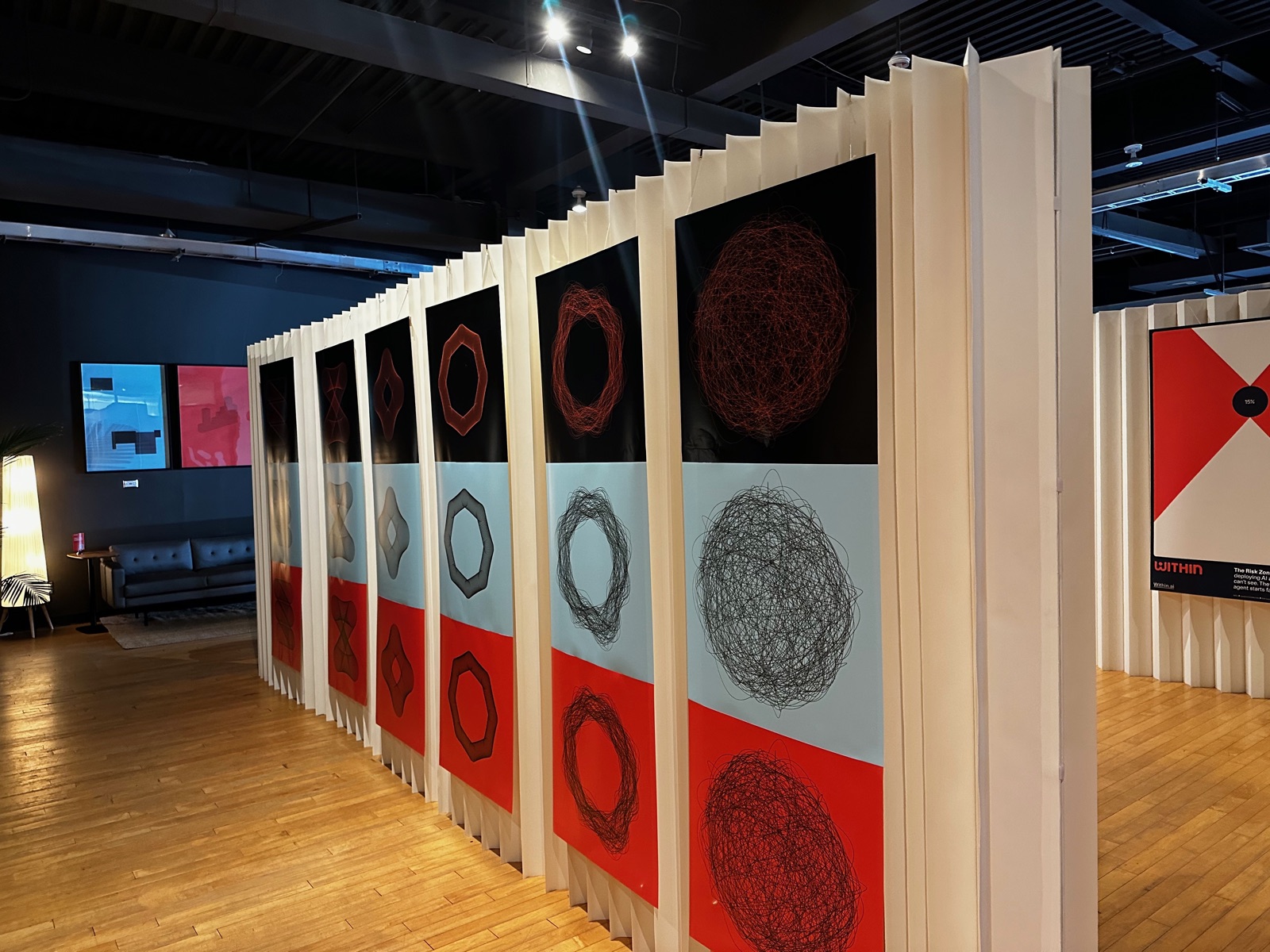
The space read like an art gallery had collided with a furniture showroom. Accordion paper walls. A dozen large posters in red, cream, and navy… striking, museum-grade infographics built from a survey of 200 enterprise executives. Numbers, annotations, beautiful geometry. And if I’m being honest, you get almost nothing from them. The imagery doesn’t correspond to the figures unless you squint very hard. Pretty, curious, disjointed.
She told me people keep wandering in to ask the price of the couches. Of course they do. From the sidewalk you have no idea what this place is. The company is called Within, freshly rebranded from Klarity. I had never heard of Klarity. I had certainly never heard of Within.
Then the small touches started registering:
- The free coffee costs a LinkedIn follow.
- Entry to the giveaway, a full-body DEXA scan, costs your complete contact information.
- There’s a QR code for referring someone to Within: their info and yours, please.
Nothing in that room is free. Everything is priced in information.
Intentional design: nothing converts in the room
My first read was the cynical one. An AI startup blowing money on a vanity space in downtown Palo Alto, something to hold a happy hour in and mention to investors. Very effective at that, and a giant waste of marketing dollars at everything else.
Then the rebrand did the reframing for me. When you rename your company, your problem isn’t feature awareness or pricing objections. Your problem is that nobody knows you exist, including the people who knew you last year. Within’s pop-up isn’t trying to close anyone on a couch. It’s engineered so that a specific kind of person, a curious operator or investor within walking distance of half the term sheets in the Valley, walks out wondering who on earth put this on… and looks them up.
The conversion doesn’t happen in the room. It happens an hour later, on their website, self-directed.
Once I saw that, the whole disjointed gallery snapped into a single line of intent. One goal: get the right person to send themselves to within.ai. The coffee, the couches, the cryptic posters, the DEXA scan, the referral QR. Every element either captures a lead or provokes the visit. Even confusion is intentional. Someone who needs the whole thing explained from the sidewalk was never the buyer. Curiosity is the qualification filter.
Product marketing masterclass: one ask beats many
Focusing on a single conversion feels like leaving opportunity on the table. Every extra ask looks like an extra chance to win. The data says the opposite: commit to one action, cut everything competing with it, and results multiply.
Ellie Mirman, who ran marketing at Toast, found that emails with a single call to action drove 371% more clicks and 1,617% more sales than emails with competing asks. Not 20% better. Multiples better, from removing options rather than adding them.
The pattern is older than email. In the Columbia jam study, shoppers who stopped at a table with 24 flavors bought jam 3% of the time. Cut the table to 6 flavors and 30% bought. Ten times the conversion, from a tenth of the choice. Every additional ask you put in front of a buyer is a tax on the one ask that matters.
And the physical-world premium is real: EventTrack’s 2026 experiential marketing report found 61% of consumers are more inclined to purchase after a live brand experience. Most brands host the experience and hope the goodwill converts on its own. Within gave every ounce of it somewhere to go: a follow, a contact record, a referral, a site visit.
AI wrote it, AI designed it, AI ran it
If this were 1996, we’d call it innovative guerrilla marketing. But in 2026, for an AI transformation firm, AI is the story.
Read the prose on those walls and it is unmistakably AI-written, with very little human sanding. The infographics feel AI-generated. The whole concept has the flavor of a single prompt: create a viral in-person marketing event to drive a rebrand, fill it with imagery that provokes curiosity, and optimize for one action… visitors handing over their information and self-directing to the website. A while back, Anthropic ran an experiment giving Claude control of a vending machine business. Walking through this pop-up felt like the marketing department’s version of that experiment, executed with a real budget.
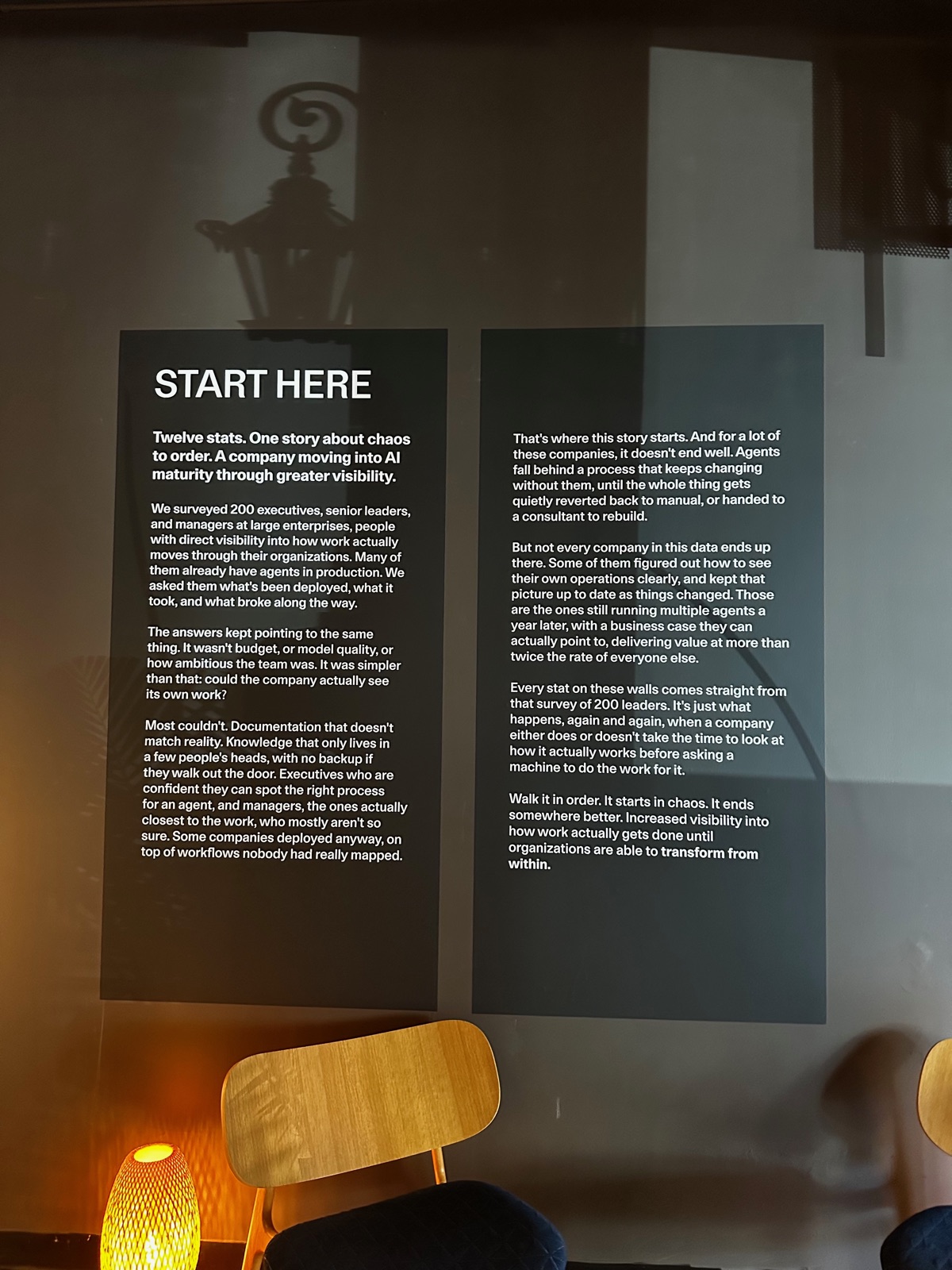
I’ll be honest: I hated reading text that was so clearly AI prose. And for this brand, it’s exactly right. Within sells AI transformation. Their marketing is AI-transformed. The medium is the demo. Whether they can deliver that transformation for customers at scale, who knows. But they showed me how they think before anyone booked a meeting, and that’s more than most vendor decks accomplish.
Notice what this is not. It’s not AI SDRs, not hyper-personalized sequences, not automated ad spend. That’s AI making old marketing cheaper. This is AI making new marketing possible: a full concept, prompted, designed, and executed to drive one human action.
The question to ask before you spend a dollar
What I took from a free cup of coffee: before you fund any marketing, name the single action you want the right person to take, then audit every element against it. Not the impressions, not the vibe, not the three secondary CTAs your team couldn’t bear to cut. One action.
The second thing: decide who your buyer is, then let the mechanism filter for them. Within’s buyer is the person curious enough to investigate an unexplained furniture store. That curiosity predicts the meaningful dialogue they actually want to have. The wide net isn’t sloppy targeting… it’s filtering based on the buyer’s behavior.
I walked in for free coffee and walked out having followed them on LinkedIn, entered their giveaway, photographed their walls, and written this article showcasing them!
That’s product marketing shifting in the age of AI. Not every prompt is going to yield a campaign that works… but despite my initial skepticism, this one did. And measured against Claude running a vending machine, I’d score it the far more successful AI transformation.
Naming the single action your marketing should drive - and cutting everything that competes with it? Let’s talk.