Five stages of the algorithm, each one a decision about whose outcome the product serves, and what it costs in discovery.
I should confess something first. I like commercials.
Not all of them. But I have never minded that an ad was built to move me. The brand picked me, paid to reach me, engineered the thirty seconds to change my behavior, and I still walk away knowing about something I would never have gone looking for. The targeting and the discovery arrive in the same package.
I was turning that over during a keynote by Barak Y. at the @Scale conference on the evolution of recommendation algorithms, with a second talk later the same day circling the same idea from a different angle. Somewhere between them, the whole arc lined up. Every stage of personalization we have shipped in three decades is the same value-proposition decision, asked again with better tools. The question always sounds like “how do we make this more relevant to you?” The answer, almost always, has been “how do we get more of you?”
Worth walking the stages, because each one is a product-marketing claim before it is an algorithm.
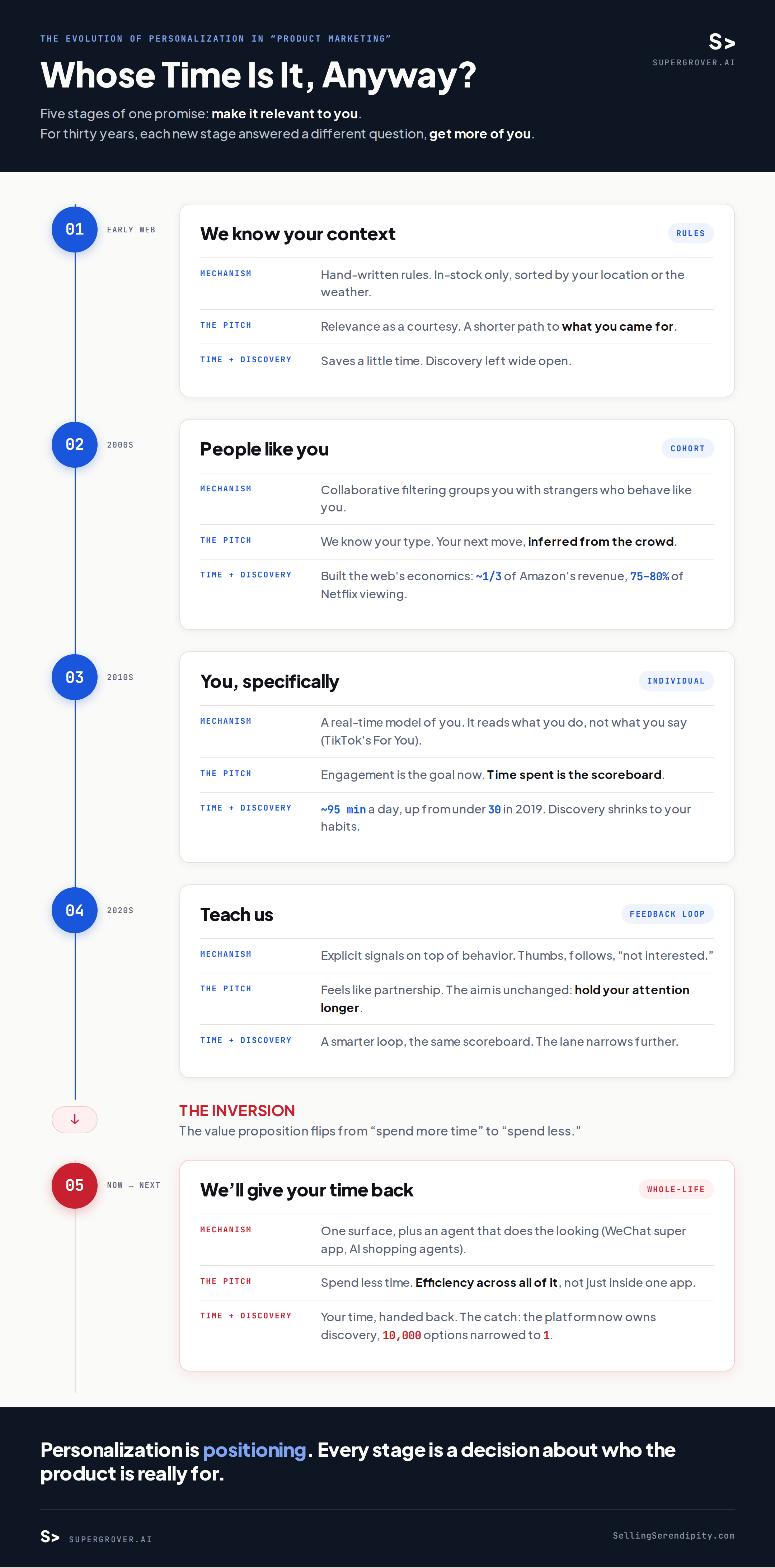
Stage one: we know your context.
The first move was rules a human wrote. Show only what is in stock. Reorder the listings by what is available in this zip code. Surface the rain boots when it is raining. No learning, no model, just a designer deciding that static was leaving value on the table. The value proposition was modest and honest: instead of choose-your-own-adventure across an undifferentiated catalog, here is a shorter path to the thing you probably came for. Relevance as a courtesy.
Stage two: people like you.
Then the machines started learning, and the unit of relevance became the cohort. Collaborative filtering put you in a room with strangers who behave like you and assumed their next move would be yours. This is the stage that built the modern internet’s economics. Amazon has long been estimated to draw around a third of its revenue from its recommendation engine. Netflix says 75 to 80 percent of what people watch comes from what it surfaces, and values the system that keeps subscribers from cancelling at more than a billion dollars a year. The pitch moved from “we know your context” to “we know your type,” and the type was inferred from the crowd, not from you.
Stage three: you, specifically.
The cohort was still a box. The next leap was to climb out of it. TikTok is the cleanest example: the For You feed barely cares what you follow or say you like. It reads what you actually do, the half-second pause, the rewatch, the quiet skip, and tunes to the individual in close to real time. The result is a number that should stop any product person cold. The average user spends about 95 minutes a day in the app, up from under 30 minutes in 2019. Two people open the same icon and inhabit two different products.
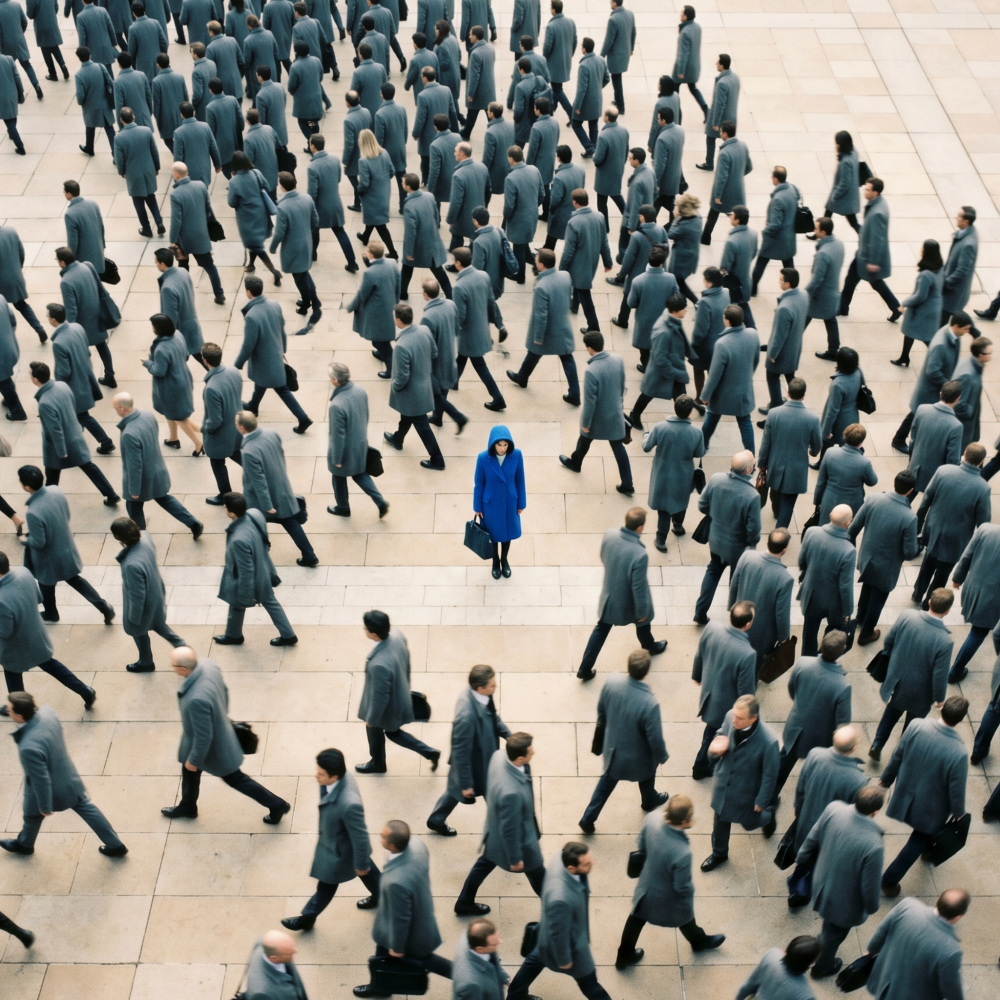
And notice what the value proposition has quietly become. It is no longer relevance as a courtesy. It is engagement as the goal. Time spent is the scoreboard now, and the personalization exists to run it up.
Stage four: teach us.
The fourth stage admits the obvious limit of the third: behavior alone is a narrow read of a person. So the system invites you to correct it. Thumbs, “not interested,” save, follow, the explicit signals layered on top of the implicit ones. Netflix leans far more on what you finish than on what you rate, but the rating still helps. This is the iterative loop, the system getting smarter the more you tell it, and it feels like partnership.
The gold star, though, has not moved. The loop optimizes the same thing the third stage did. You teaching the algorithm is still in service of the algorithm holding your attention longer. Pleasant, mutual, and pointed at exactly the same outcome.
For four stages straight, every advance dressed itself as a gift to you and paid out as more of you for them. More time, more sessions, more conversion. “For you” meant “more of you.” That is not cynicism, it is just the scoreboard. And it is why the next stage is the interesting one.
Stage five: we will give your time back.
The super app breaks the pattern. WeChat is the proof of concept the West keeps describing and not quite building. Around 1.4 billion people use it, more than 90 percent of them through mini-programs that live inside it, and it absorbs roughly a third of all mobile time in China. You do not leave it to hail a ride, pay a bill, book a doctor, or buy from a shop. There is no home screen full of apps to manage. There are functions, surfaced when you need them, and the promise is the inverse of stage three. Not “spend more time here.” Spend less. Get to the thing and get on with your day.
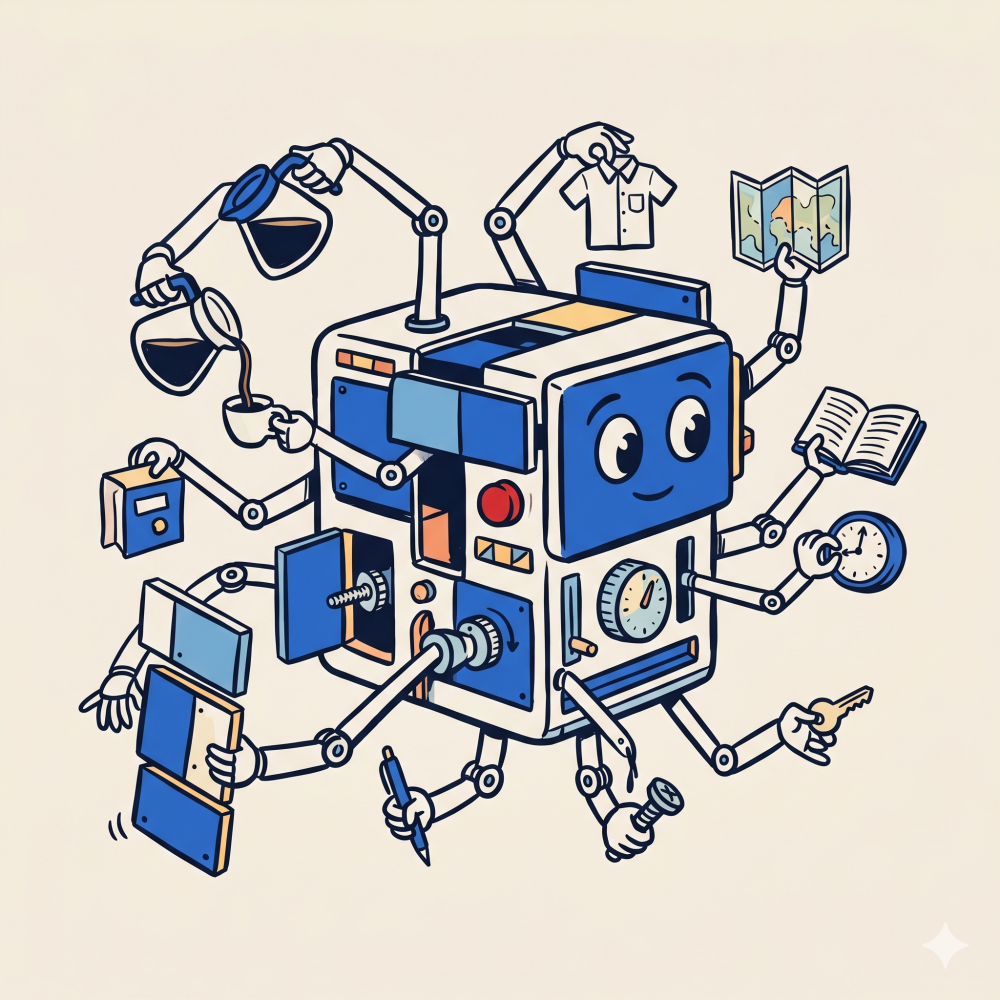
This is the first stage where the value proposition and your actual interest point the same direction. After thirty years of products optimizing the time you spend inside them, here is one optimizing across all of your time, and willing to hand some of it back. If you build products, that should feel like the good ending.
It is also the trap.
Because the moment a platform earns the right to optimize across all of your time, it inherits the power to decide what fills the time it frees. Give someone their evening back and you become the one who suggests how to spend it. The clearest tell is in commerce, where the stakes are money. A platform’s profit depends on owning the moment of discovery: which products rank, which one gets the paid slot, which margin the algorithm steers you toward. Remove the friction and you also own the fork in the road.
Generative AI is the accelerant, because it moves discovery off the screen entirely. The agent does the looking. Amazon’s shopping assistant already reaches hundreds of millions of people and is being built to shop the entire web on its own terms. Across last year’s peak shopping week, Salesforce estimated that AI and agents influenced 67 billion dollars in sales. When an agent narrows ten thousand options to the one it hands you, the personalization promise and the discovery-control problem stop being two things. They are the same thing, and the user never sees the other nine thousand nine hundred and ninety-nine.
Which brings me back to the commercials. The reason I never minded the targeting is that the targeting still left the door open to things I did not ask for. I learned about products, ideas, whole categories I would never have searched. Hyper-personalization, taken to its logical end, closes that door in the name of serving me. It gives me precisely what my past predicts and quietly removes the chance to become someone with different tastes.
So here is the part for anyone building. Personalization is not a feature you tune. It is positioning. Every choice about what to show someone is a choice about who the product is really for. The payoff for getting it right is real: McKinsey puts the typical revenue lift at 10 to 15 percent, and more than a trillion dollars of value across US industries in the gap between the leaders and everyone else. But you do not win that money with the most powerful algorithm. You win it by deciding, on purpose, that good personalization has to work for the user and the business at the same time. Serve people well, earn the revenue, and still leave room for them to find what they would never have gone looking for.
Give people their time back, and earn the right to fill some of it on trust rather than extraction. The platforms that win the next stage will be the ones that personalize toward who the user could become, not just toward who the data says they already are.
I still like commercials. I would just like to keep meeting things I did not know to want. If your product is doing the personalizing, that is now your call to make, on someone’s behalf, every single day.
Deciding whose outcome your personalization really serves? Let’s talk.