I’ve often thought the hallmark of very successful products stems from the “value exchange”.
I seek some value from the product (generally in solving an unmet/underserved problem) and you seek value from me (generally in the form of direct or indirect monetization). Personally, I’m a big proponent that success comes in the form of fair value exchange - where there isn’t an outsized skewing of value towards one of the parties… but a recent experience made me consider that perhaps there’s more than one frame of reference to consider - and I’d like to share that with you.
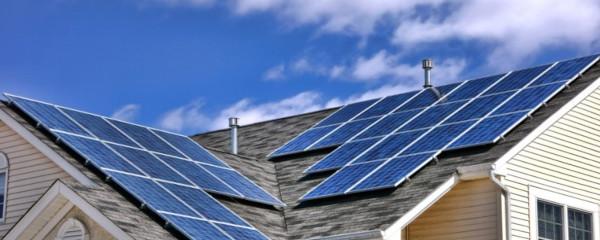
Recently we decided to get solar for our house - and while I’d love to make this a fascinating post about my learnings on the solar industry and its operations, that won’t be the case. Suffice to say as both a frugal individual, and someone who’s extremely analytical, I did my research and got a host of quotes. I’ll share a comparison up front for those who are visual learners (like me!).
The “baseline”, as I’ll call it, was Tesla Energy - while not strictly speaking the cheapest, they were darn near close. Arguably being a manufacturer of the solar panels and Powerwall batteries, they have owner’s economics - and under the broader umbrella of a portfolio of products across the Tesla ecosystem the company can look to win my business with lower margins on the energy front, and monetize me across a variety of products (as clearly evidenced by the litany of marketing emails I now receive from Tesla).
The “discount” options… well there were a couple. Project Solar came in at about 10% cheaper than Tesla Energy - but there’s a LOT of complaints online. I’m not saying I’d have a problem, but with little kids at home, and both of us being working parents, I place a lot of value on everything being hassle-free, and issues being easy to resolve - and I was concerned that the “discount” was really coming out of that area of the value exchange.
The “local” option [TLDR; we went with these folks] was Clean Solar (actually referred to us by Tesla Energy… go figure!). They came in at about 15% more than the baseline, but the discussion, details, and level of peace of mind they were selling as part of the product seemed well aligned to the value exchange we were looking for.
And then there was the “big solar” option… I had a couple of these quotes, but the one that stood out was Sunrun.
Ok… minor “solar” digression here (in spite of what I said!)
There’s a number of ways one can “pay” for solar… but simplistically:
- Own outright - the solar system is entirely yours, and you paid cash for it! (picture me handing a suitcase of $100s to the solar installers)
- Own via financing - the solar system is yours, but you’ve borrowed some/all of the money, so like any loan, there’s costs associated with the financing
- Power Purchase Agreement (PPA) - the solar system is NOT yours, but belongs to the company you got it from. They install the system for free, but in exchange you agree to buy all the energy it generates at a pre-agreed rate (with escalations over time) for a period of time (such as 25 years). Simply put they become your home’s primary energy company
Back to my story…
So Sunrun comes in and is pushing the PPA like it’s the best thing since sliced bread - hesitant to even share numbers on what it would cost me to buy the solar system. At no point in time had I been looking at any form of financing (hey… I already have a HUGE monthly energy bill… to my family a big part of the solar value exchange was getting rid of that monthly bill entirely!). But, I’m a numbers guy… so I get their numbers… my back of the napkin math would be that over 25 years of the PPA I would pay AT LEAST 3x more than the baseline. Knowing that number seemed obscene, I pushed… “well what does it cost to purchase outright” - and was quoted 2x more than the baseline.
But what if I’m not the “target” buyer?
For me, it was a toss-up between Tesla Energy and the Clean Solar. The value I sought indexed heavily on not having an energy bill, and peace of mind that if anything happened I had a person - not a corporation to deal with. And if my comparison showed me anything, it was that the value exchange with “Big Solar” was so heavily skewed towards them to make me think as a product leader - how does anyone buy from them?
To counterpoint, I have a friend who shared their rationale for buying a PPA solar install. They too had huge energy bills - but couldn’t afford to own their solar outright. If the PPA option allowed them to buy cheaper energy than PG&E was selling (PG&E = our local utility company) then it made financial sense. They weren’t buying solar - they were buying energy - and “expensive” solar, could still be cheaper energy - and that was a good value exchange for them.
Of course this is a story with a purpose…
This is a real anecdote, but one I’ve deliberately chosen to illustrate a point. A “fair” value exchange is based on the perception of the customer. The PPA is a hugely successful approach in solar, because there are a LOT of customers - perhaps even more - that are more like my friend (in their considerations) than me.
So consider closely, what’s really driving your customer’s perception of value!