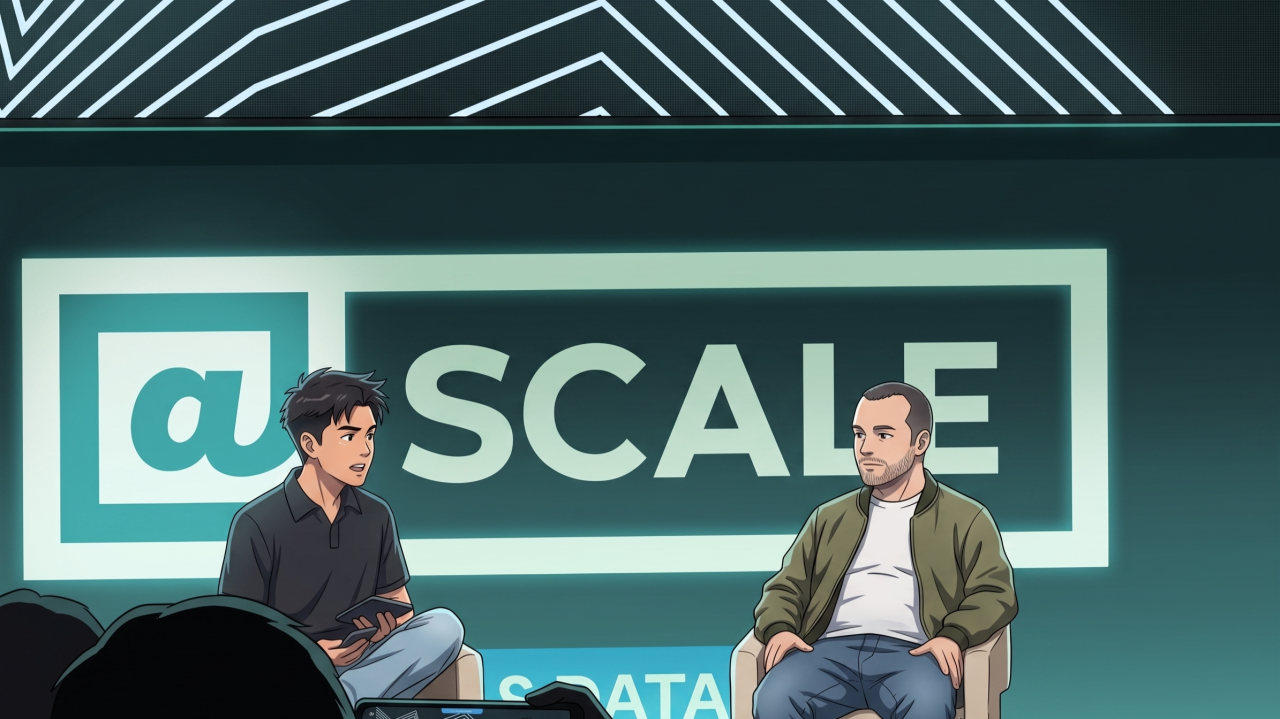
A serendipitous introduction from a mentor led to a coffee with a founder who was, by his own math, six months from selling his company.
I tend to think about careers like his in acts:
- The first act is where you learn the business on someone else’s budget.
- The second is where you run it, the long stretch where your name starts to carry weight.
- The third act is what you do once you no longer have to do anything at all.
This was supposed to be this entrepreneur’s third act: a brand new company, built from scratch, in a space getting more crowded by the quarter, with a real niche he had spotted and real technology he had already built to go after it.
His resume was long, but the resume was never the asset. The rolodex was.
Two acts spent in rooms most people only read about had left him with a contact list that opened doors on the first ring: people who had helped build Microsoft and Salesforce and Oracle, partners who ran the biggest desks at Goldman Sachs, founders whose faces you have seen on a magazine cover. I have widened that circle and blurred the names to keep him anonymous, but not the altitude. The altitude is the point.
That network is most of how the company existed at all. He had bootstrapped it himself to a first sliver of traction, and now he wanted a partner to roll up their sleeves and take it to the next level.
We spent a couple of hours together. He walked me through the product, the market, the vision. And somewhere in the second hour, I realized he was describing two completely different companies.
One was built to sell.
He knew exactly what the product had to look like to be sellable, who the buyer would be, and why they would want it. He had built the thing with that buyer in mind, and when he laid out the logic, I agreed with all of it. The exit thesis was sound. Six months was aggressive, not crazy.
One was built to last.
A defensible business that kept adding products, kept opening new vectors into the market, kept compounding. When he talked about bringing in a partner and scaling it, his whole posture changed.
When he described the sale, he was precise and calm, like a man reading a map he had read before. When he described the company that would outlive him, his eyes lit up.

What was really driving him
Both goals were completely valid. That is what made it hard.
He did not need the money. He had had a very good second act. The windfall from a clean exit would be satisfying, a nice way to close another chapter, a great story at a dinner party. But it was not going to give him anything he did not already have.
The legacy company was different. That was the thing he clearly wanted, whether or not he had said it out loud. You could see it. He would take off the entrepreneur hat, put on the product hat, and start walking me through the roadmap. This, then this, then this after that. The man was happiest three product generations into a company that did not exist yet.
So why was he spending most of his energy on the six-month exit?
Because that is the playbook he knew. The exit was his second act, run back. He had done versions of it before and he knew exactly how the movie ended. The scale-and-defend company was the thing he wanted and the thing he had never actually built. One future was familiar. The other was the point.
Three things the data says
Pull back from the coffee table for a moment, because the numbers around a decision like his are not the ones most people carry in their heads.
Start with who actually builds the companies that last. The myth says it is twenty-somethings in hoodies. When researchers at MIT and the U.S. Census Bureau studied the fastest-growing one in a thousand American startups, the average founder turned out to be 45.
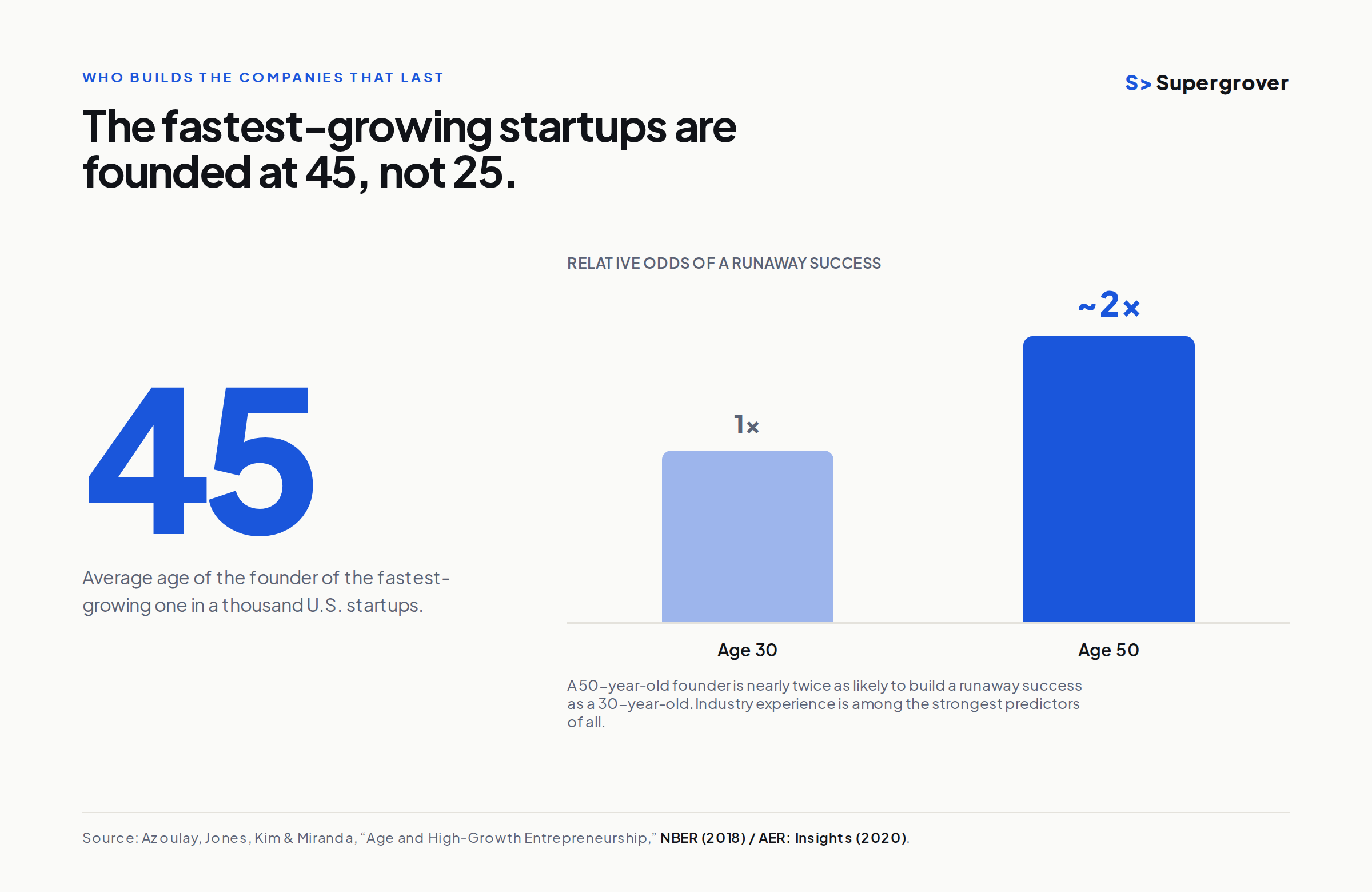
A 50-year-old founder is nearly twice as likely to build a runaway success as a 30-year-old, and prior experience in the specific industry is one of the strongest predictors of success there is.
So the legacy company was not a long shot for him. He was the profile. Experienced, deep in his market, and past the age where most people assume the swing has left them.
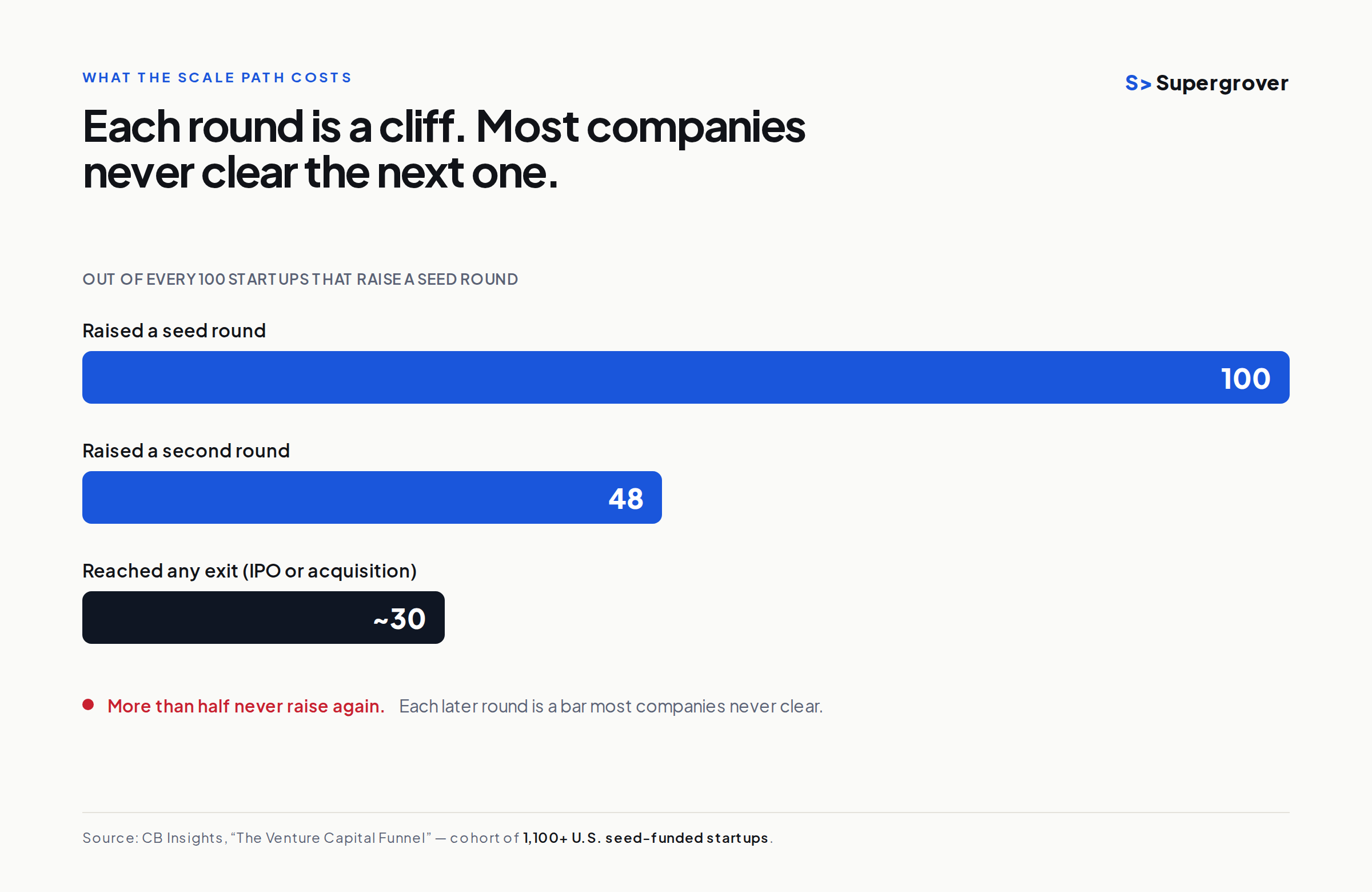
Now look at what the scale path actually costs. Building a company to take real share is not one decision, it is a decade of them, funded one round at a time, and the rounds are a cliff. Tracking a cohort of more than 1,100 seed-funded startups, CB Insights found that fewer than half ever raised a second round, and only about 30% reached any exit at all. Taking massive share against giants means raising again and again, each time clearing a bar most companies never clear. That is not a hedge you bolt onto an exit plan. It is the whole job.
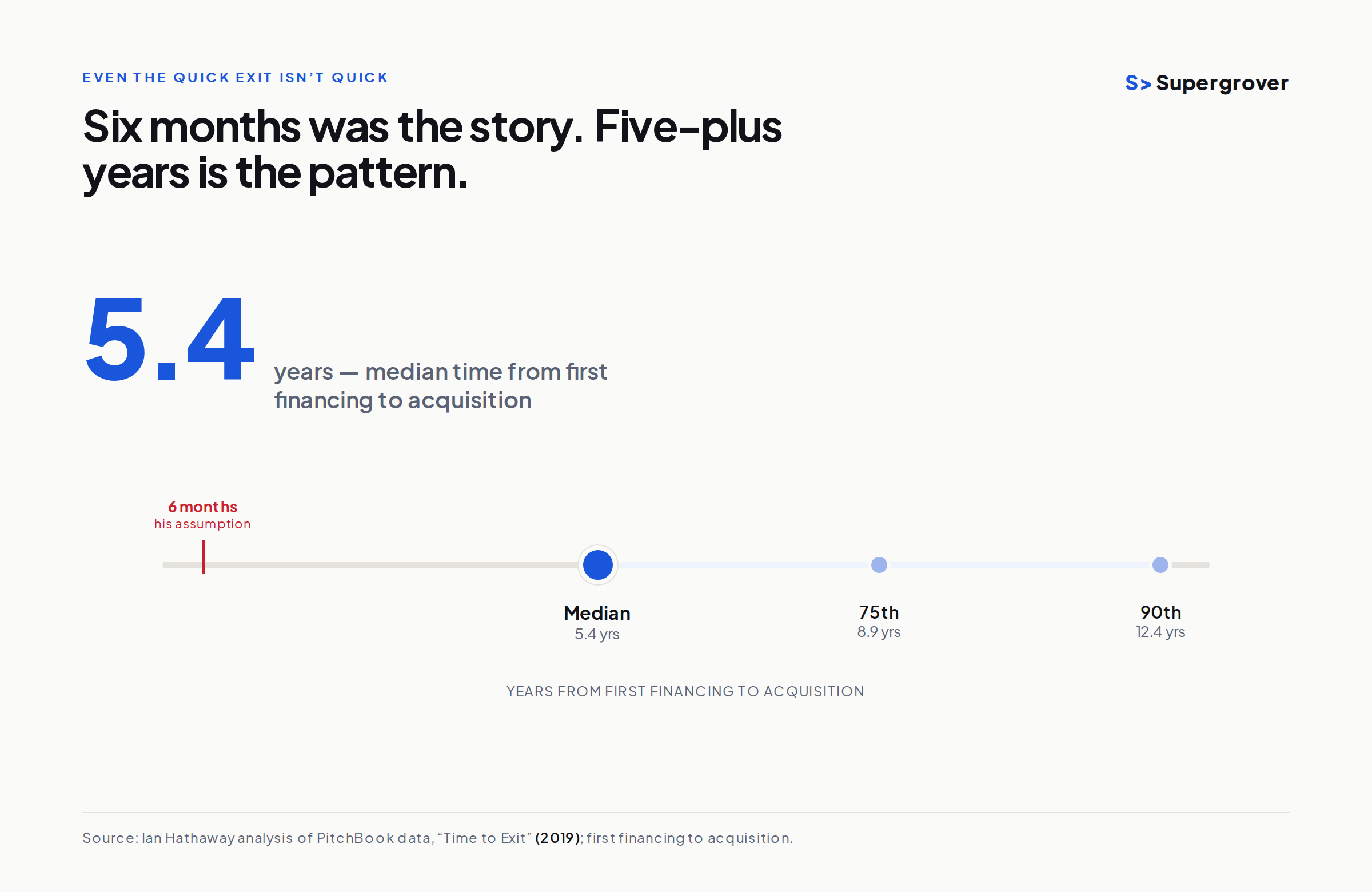
And the exit, the supposedly quick one? It runs on a clock most founders underestimate. Across venture-backed companies, the median time from first financing to acquisition is more than five years, and the slowest quarter of deals run closer to nine or twelve. The fast exit is real, but it is the exception. Which leaves the uncomfortable truth: both of his paths are long, both are committed, and they are not the same path. You do not casually hold both.
Two goals. Why not just build one big machine?
His answer to all of this was reasonable, and wrong.
He believed he could build once and keep both options alive: get the product clean, get it to traction, then sell if the right buyer showed and raise and scale if not. One build, two outcomes.
But the best version of either is a different build. Optimizing for the sale and optimizing for the scale pull the product, the funding, and the roadmap in opposite directions. One machine big enough for both is really two machines fighting over the same parts.
You build a company to sell by getting it just polished enough, just de-risked enough, just attractive enough to the one buyer you have in mind. You keep the cap table tight, you raise as little as you can, you do not overbuild. You are running a sprint toward a finish line you have already drawn on the ground.
You build a company to last by doing almost the opposite. You raise to take share. You build a broad technology portfolio, not one clean feature. You plan to stand in the ring with companies ten times your size and not get knocked out. Different competitive landscape, different funding strategy, different product.
Both of his goals were achievable. Genuinely. He had the chops, the network, the market read, the technology. Either one, run as Plan A, was a real outcome.
But run as Plan A and Plan B at the same time, both were likely to fail. Not because he was not good enough, but because optimizing for two opposed targets means under-building for both. The exit version never gets clean enough to command the price. The legacy version never gets enough fuel to take the share. You split the difference, and the difference does not sell.
Knowing yourself is the actual work
So how does he decide? There is no right answer here. There is a true answer, which is harder.
There is nothing wrong with another turn of the second act, even one that drops a few more million in the war chest. But he has to be honest about whether that is why he got in. If it is not, the exit is a detour dressed up as a destination.
And there is nothing wrong with wanting to build a legacy. But wanting it means throwing out the playbook that made the last two acts work. The thing that made him successful before is the thing that will quietly steer him toward the wrong goal now, because it is the move he trusts. Wisdom, in his case, looks like setting down the tool he is best with.
The tell was already there, in the coffee shop. His eyes did not light up for the exit. They lit up for the company.
We talk about strategy like it is an analysis problem. Most of the time it is a self-knowledge problem wearing an analysis costume. The founder who can say out loud which future he actually wants has done the hard part. Everything after that is picking the right game plan and refusing to play the other one.
The real question I left him with was not about the product, or the market, or the buyer.
It was whether he was still trying to win his second act, or finally ready to start his third.
Staring down a fork between the exit you know how to run and the company you actually want to build? Let’s talk.