A serendipitous introduction, from a contact I hadn’t spoken to in years, led to a conversation with a startup’s head of product about a fork in the road: four yellow brick roads to potential futures, but a budget to build exactly one.
If you’re a product leader, you may think this is a conversation about prioritization. And while that may be the symptom we see, it isn’t the core problem the head of product was actually wrestling with.
He’s a zero-to-one product leader, newly in a bigger seat, the kind that swallows product and partnerships and a few things nobody had named yet. We were feeling each other out. The engagement, if it happened, would pay well below my usual rate. I took the call anyway, because every so often you can tell a problem is going to be worth more than the invoice.
Early on I asked the question I always ask.
Tell me about the things you’re most excited about on your roadmap.
I love that question for a reason most people miss. It tells you who you’re sitting across from. Some answer it like a status report… velocity, tickets, what shipped last sprint. Others light up. They live in the product, they’ve argued with it at 2am, they can’t help themselves.
I got the second kind. The liver and breather.
Then he laid out four paths. Not four features. Four different futures for the company, and as a founder running mostly on bootstrap revenue with a little funding behind it, he could afford to chase exactly one.
This wasn’t the incremental question, the A-or-B-or-C of a release calendar. This was the what’s-next question. The kind that quietly decides what the company becomes.
Two of the four stood out.
The exciting one.
The first was a near adjacency. A manual pain point that had come up over and over in their early customer interviews… hours of grinding, error-prone work everyone hated and nobody could avoid. It sat right next to the existing product. Build it, and you deepen wallet share with the customers you already have. You lift top-of-funnel conversion. And here’s the part that made the operator in me lean in: there were vendors sitting upstream of this company, selling manual solutions to that exact pain.
Solve it cleanly and those vendors don’t just get displaced, some of them turn into a channel.
The geek in any of us looks at that and salivates. It’s the genuinely interesting product problem. Clean adjacency, real demand, a channel hiding inside it.
The trouble is what it doesn’t do. It doesn’t really grow the business. You’re already in that room. You make a few more dollars per customer, you tighten the funnel, but you’re going back to the same trough you’ve been drinking from.

The boring one.
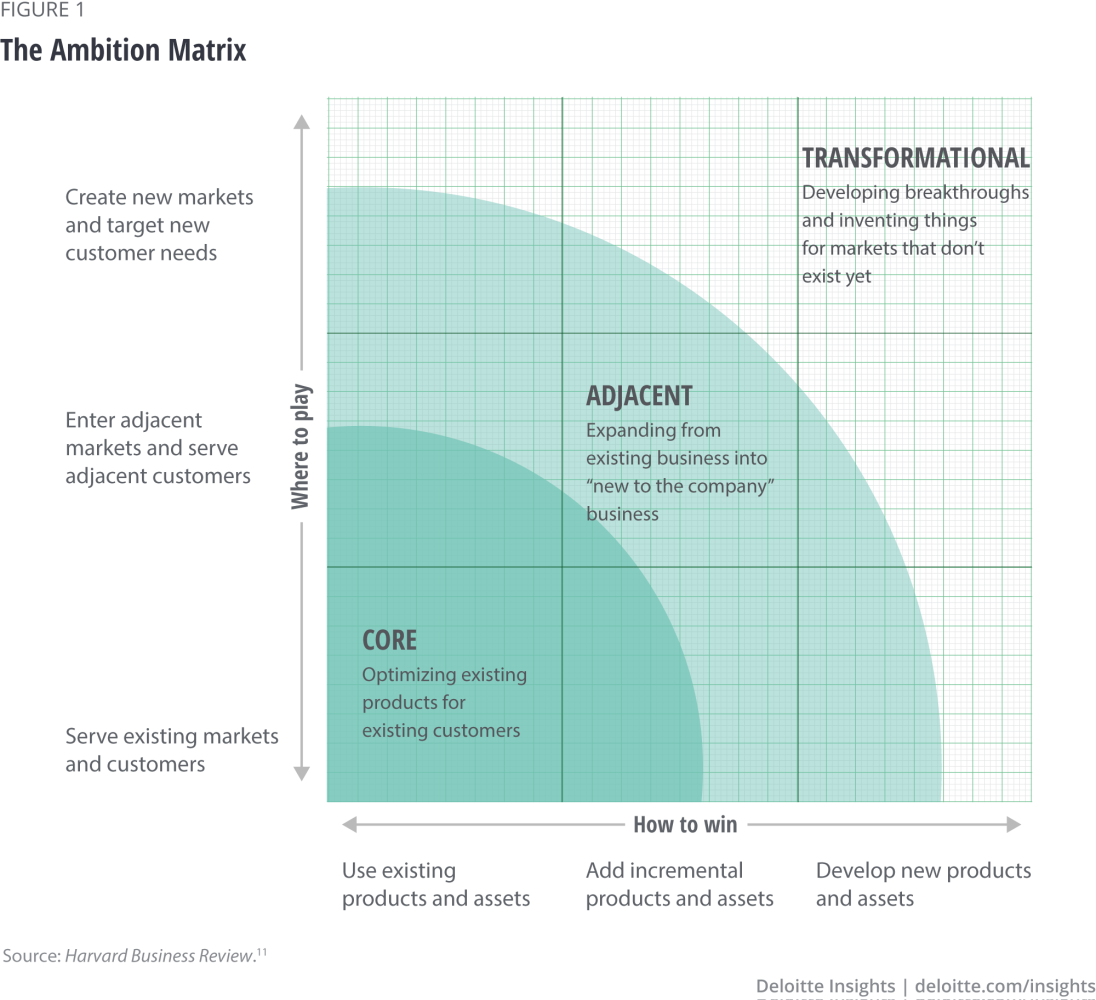
The second path was boring, and I mean that as a compliment. It was an adjacency the same clients had, but it had nothing to do with the existing product. Different problem, different sphere of spend. Build it and you don’t deepen the trough, you find a whole new one. It cracked open the addressable market in a way the first option never could, and it reached buyers well beyond the ones already on the books.
But the head of product wasn’t in love with it. This wasn’t the thing he’d spent years building. It wasn’t his turf. Some of his customers would buy it, sure, but it largely spoke to a different buyer inside those accounts. Different buyer means different sales motion, different objections, different proof. It’s the closest thing to starting a new company that still shows up on the same cap table. A new company funded by the old one.
So how do you actually weigh those two?
One gives you velocity. Close to home, low risk, you already know how to build it and sell it… and the ceiling is low. The other expands the map, but the ceiling is high precisely because the floor is missing.
Here’s where most founders fool themselves. They build a tidy business case for each, line them up side by side, and treat it as apples to apples. It isn’t. One is a known quantity with a small payoff. The other is a bet with a different buyer, a different motion, and a real chance it just doesn’t land.
That difference has a name in the research.
When Bain studied several hundred companies’ growth moves, they found the further you push from your core, the worse the odds get, and the average move into a genuinely new adjacency fails about three-quarters of the time. Only about 1 in 4 creates real value. The far path isn’t just bigger. It’s bigger and roughly three times more likely to break your nose.
Here is the symptom from the top of the conversation, the word everyone reaches for.
Prioritization.
Except real prioritization isn’t “do we ship feature A or feature B given our engineering capacity.” That’s scheduling. It’s the harder thing: when the choice in front of you is this consequential and this hard to reverse, what do you commit the company’s scarce execution to?
And the factors that actually decide it aren’t on the product roadmap at all:
- The first is risk profile. How much risk can this company stomach for incremental upside? That answer lives in the runway, the cash position, how the existing portfolio is performing, whether you’re bootstrapped or raising, and what metrics you need to show by when.
- The second is the time value of money. The path that pays sooner hands you fuel to grow now. The path that pays later might pay in a bigger order of magnitude… if you survive long enough to collect.
- There’s a third factor, and it’s the one product leaders forget. Execution capability. Not can we build it, but can the rest of the company run the new play. The far path needs a sales team learning a new motion and a founder willing to be a beginner again. A flawless business case still dies there.
Which is the core problem, the one underneath the symptom, and the thing I most wanted him to walk away with.
This was never a product decision.
It was a business decision that happened to be driven by product. And those decisions do not sit nicely inside the product org.

So we didn’t end at “build option one” or “build option two.” We ended at a sharper question.
Not just which future do you want, but which future can this company, all of it, actually execute.
The right answer optimizes for both at once, and the gap between the future you want and the future you can run is exactly where founders get hurt.
That’s the part the roadmap never shows you. The fork looks like a product choice. It isn’t. The biggest forks belong to the whole leadership table, not to product alone… and when the table chooses together, the lucky breaks start landing on the side you picked on purpose.
Staring at a fork like this one? Let’s talk.