I recently read Kid Brother. It’s a short story first published by Isaac Asimov in the 1990’s. (Mild spoiler alert.)
The story (like much of Asimov’s writing) is intriguing - blending techno and achievable sci-fi themes with philosophical questions about human nature.
In this case Asimov poses a question about love between a human and technology. No, no, not the romantic kind. In fact to really drive home the theme Asimov toys with the parental kind of love - between a human parent and an adoptive robotic child.
And in a dramatic final-page twist Asimov pushes - is it possible for a parent to choose their adoptive (robotic) love over their biological one?
We’re already living the setup
We live in an era where people are connecting with machines and software on an entirely different level. From companion robots, to AI psychologists, to dating an AI… and so much more… it’s not hard to envision the scenario Asimov puts forth as being in our near future.
And while the technology has evolved, and will continue to do so to leap over and over again at crossing the uncanny valley, I don’t think that’s what’s driving the trend. I don’t believe it’s the realism of interacting with a robot, or that AI could (?) pass the Turing test that is leading to our embrace of technological companionship (yes, those are contributing factors).
I believe it’s the lack of connection our technology is inadvertently creating.
I spent years building relationships with people over video conference having never even had the chance to share a meal, a glass of wine, or a coffee together - and I believe breaking bread is an integral part of forging a deep connection (maybe that’s the French in me!).
I can ask my AI to research and help me level up my knowledge, whereas before I would have had to tap experts - engage them in conversation and debate, conduct primary research interviews, etc.
Connection is shifting
I’m not here fighting against this trend, or saying it’s bad - but I think we have to acknowledge that connection is shifting.
For the first time in human history we can feel a deep, meaningful connection with a rock!! I kid, and I don’t - after all, those robots, those chips that process all those lines of code are made from metal and mineral at their core.
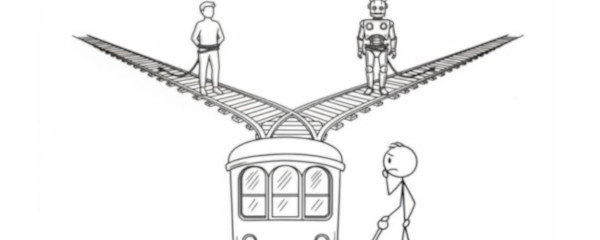
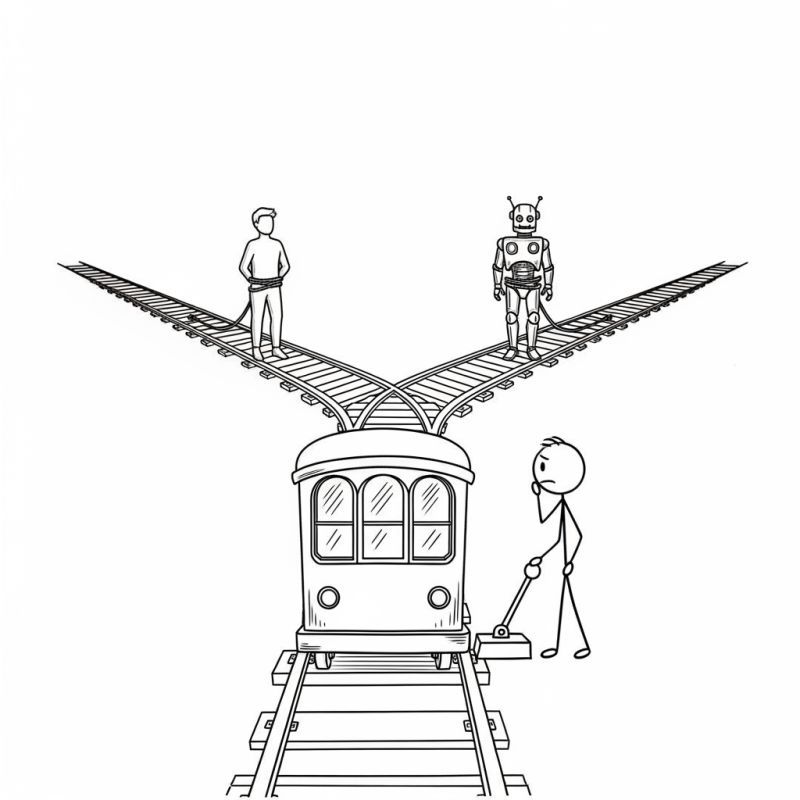
So I wonder on the future generation’s answer to the trolley problem. Would they pull the lever directing the trolley to unalive a human in order to save the robots and AI they hold most dear?